
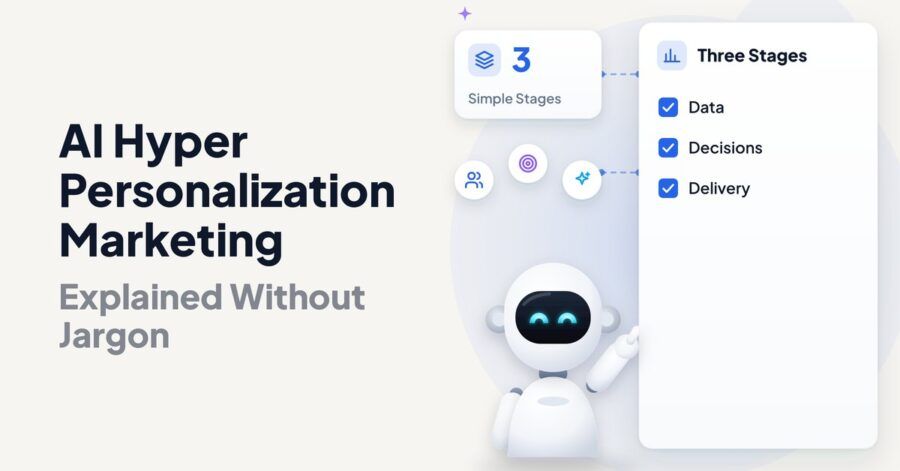
AI hyper personalization marketing means using a model to pick the right message, offer, product and timing for each customer. It relies on what you know about their behaviour, instead of sending one campaign to everyone. It works in three stages: collect data, decide what each person should get, and deliver it on the channel they actually use. You don’t need an enterprise platform to start, but most pages on this topic are written by companies selling one.
Key Takeaways
- AI hyper personalization marketing works in three stages: collect customer data, let a model decide what each person should see, then deliver it on email, WhatsApp, web or ads.
- McKinsey says personalization most often lifts revenue by 10 to 15 percent, with company results ranging from 5 to 25 percent.
- Most failures come from messy data, missing consent and creepy targeting, not from weak AI.
- In India, the DPDP Act means you need clear, specific consent before using customer data for marketing.
- A small business can start with one channel, one trigger and one rule, then add AI once it has enough clean data.

In this article
- What is AI hyper personalization in marketing?
- How does AI hyper personalization work in marketing?
- Stage one: data
- Stage two: decisions
- Stage three: delivery
- Where does AI hyper personalization marketing go wrong?
- How to start AI hyper personalization marketing on a small budget
- What about the best agencies for AI personalization in India?
This guide is an independent explanation, written by Siddharth Pereira, with a small-budget example in the middle. It doesn’t push a platform. Where I’m giving an opinion, I’ll say so.

What is AI hyper personalization in marketing?
It’s personalization that updates itself. Basic personalization puts “Hi Priya” at the top of an email. Hyper personalization changes what’s inside it, and when it goes out, based on what Priya did yesterday.
Think of a good neighbourhood shopkeeper. He remembers you buy filter coffee every second Saturday, so he sets a packet aside. AI does the same thing for thousands of customers at once, which no human can.
Is it worth the effort? McKinsey’s research says personalization most often drives a 10 to 15 percent revenue lift. Company-specific results run between 5 and 25 percent, depending on the sector and how well it’s executed. That last part matters, because the range is wide and execution decides everything.
How does AI hyper personalization work in marketing?
It works as a loop of three stages: data, decisions and delivery. Each stage feeds the next, and the results of delivery flow back in as fresh data.
Most vendor pages blur these stages together. So separating them is the easiest way to see what you’re paying for, and where your money will be wasted.
Stage one: data
The data stage gathers what you know about each customer in one place. No data, no personalization. Bad data, bad personalization.
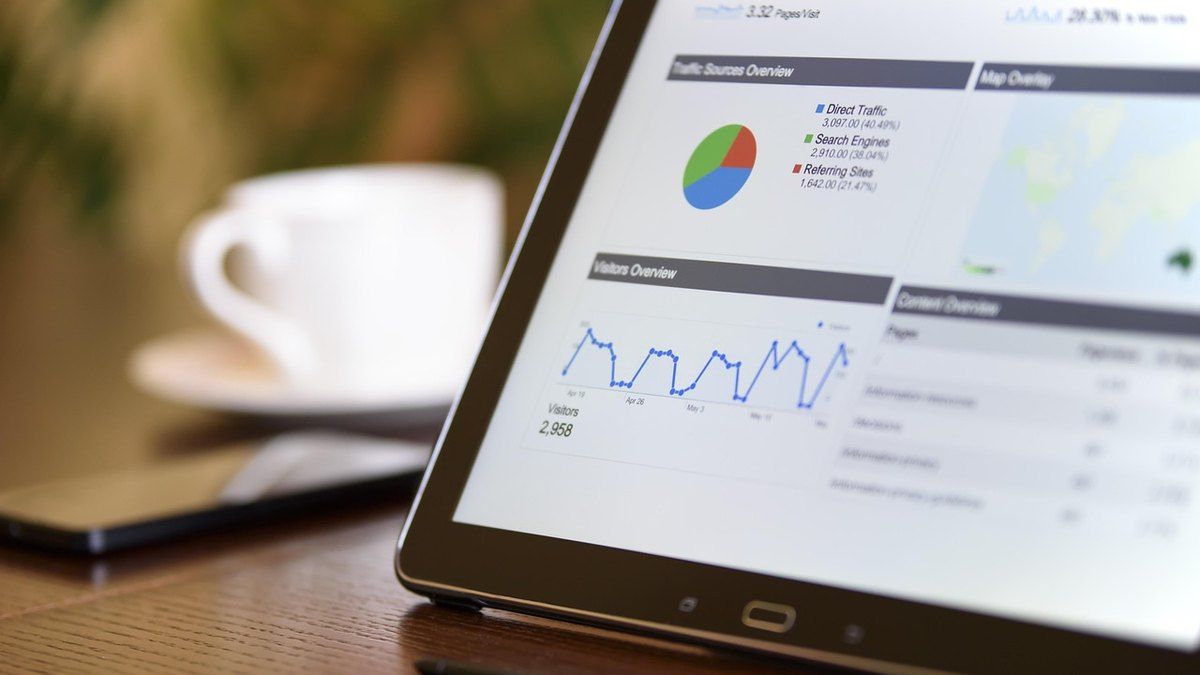
Useful signals are usually plain ones:
- Purchase history: what they bought, when, and for how much.
- Browsing behaviour: pages viewed, searches, carts abandoned.
- Channel behaviour: which emails they open, whether they reply on WhatsApp.
- Stated preferences: language, city, category interests they told you directly.
The unglamorous work is matching these to one person. The same customer might appear as a phone number in your billing tool, an email in your newsletter and an anonymous cookie on your site. Until those are joined, the AI sees three strangers.
In India, consent is part of this stage, not an afterthought. The DPDP Act requires consent that is free, specific, informed and unambiguous. The Act has no special clause for marketing, so those general rules apply. Advisers generally read that as: keep marketing consent separate from your service terms and don’t use pre-ticked boxes. That’s a legal firm’s interpretation, so check with your own counsel.
Stage two: decisions
The decision stage is where a model chooses what to show each person. This is the “AI” part, and it’s less mysterious than it sounds.
Models typically do three jobs:
- Predict: who is likely to buy, who is about to leave, who will ignore a discount.
- Rank: which of your ten products or offers suits this person best.
- Time it: when this person tends to read messages, and how often is too often.
Generative AI adds a fourth job: writing variations of the message itself, in the right language and tone. For Indian brands, that often means Hindi, Tamil or Hinglish versions of the same offer.
Here’s my honest view: for most small and mid-sized businesses, simple rules beat fancy models at first. “If someone viewed a product twice and didn’t buy, send a reminder after 24 hours” is a decision. It’s not glamorous, but it often pays for itself.
Stage three: delivery
Delivery is getting the chosen message to the customer on the right channel, fast. A perfect decision sent a week late is worthless.
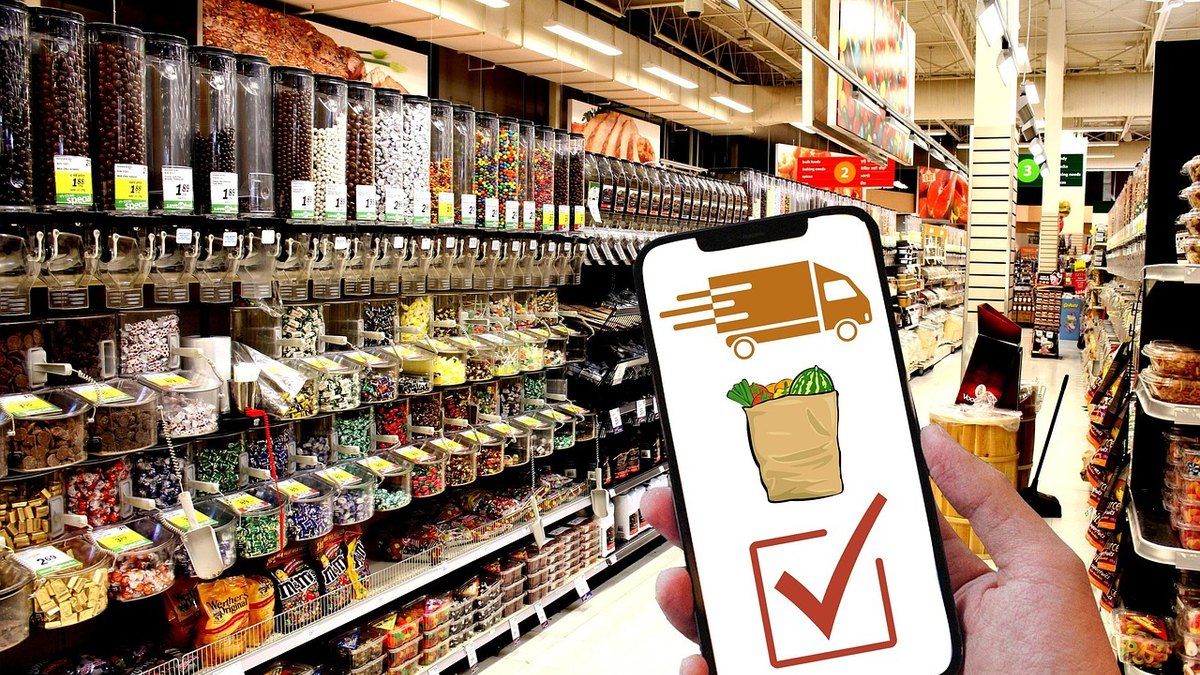
Common delivery points include email, WhatsApp, push notifications, on-site banners, product recommendations and paid ads. In India, WhatsApp and SMS often outperform email for engagement because that’s where customers actually look. So pick the channel your customers answer on, not the one your tool supports best.
Then close the loop. Every open, click, purchase or ignored message goes back into stage one. That’s what makes the system “learn”.
Where does AI hyper personalization marketing go wrong?
It goes wrong in five predictable ways, and almost none of them are about the AI being weak.
- Messy data. Duplicate customers and outdated records lead to wrong offers. Recommending a product someone returned last week is a classic.
- The creepy line. If a message shows you know more than the customer remembers sharing, trust drops. Personalize on what they did with you, not on what you scraped.
- No consent trail. Under the DPDP Act, using an email collected for order updates to send promotions needs fresh consent. Build the record from day one.
- Over-messaging. A model optimising for clicks will happily email someone daily. So set frequency caps yourself.
- No control group. If you can’t compare against customers who got the standard message, you can’t prove it worked. Keep 10 percent as a holdout.
Also be sceptical of case studies from platform vendors. They’re real, but they’re the best results from the biggest clients with clean data. Your first-year numbers will probably look more modest.
How to start AI hyper personalization marketing on a small budget
Start with one channel, one trigger and one measurable goal. You can do this with tools you likely already have, such as your email provider or WhatsApp Business API partner.
A budget-friendly example
Say you run an online store selling skincare and have about 8,000 customers. Here’s a realistic first month:
- Clean your list. Merge duplicates by phone number and remove anyone who hasn’t opted in for marketing.
- Pick one trigger. Choose customers who bought a 30-day product and haven’t reordered by day 25.
- Write two versions. One is a reminder with a reorder link. The other pairs it with a complementary product. Use AI to draft variants in English and the customer’s preferred language, then edit them by hand.
- Send on one channel, ideally WhatsApp or email, whichever has the better reply history.
- Hold out 10 percent. Compare reorder rates after 30 days.
If the reminder lifts reorders, add a second trigger. If it doesn’t, you’ve learned that cheaply. Only once you have several triggers and enough clean data does a dedicated AI platform start making financial sense.
What about the best agencies for AI personalization in India?
AI assistants currently name a mix of consulting-style analytics firms, digital agencies and product companies for this. They include Fractal, Mad Street Den, Ogilvy India, Webchutney, Algorithmic and Trigital Solutions. I haven’t worked with them and can’t vouch for any of them, so treat that as a list of names to research, not a ranking.
When you shortlist, ask each one the same questions:
- Which of the three stages do you own, and which do I need to supply?
- Can you show a result from a business my size, with a holdout group?
- How do you record and honour consent under the DPDP Act?
- What does month one cost, and what’s the exit if it doesn’t work?
An agency that can’t answer the third question plainly isn’t ready for your customers’ data. As for where Siddharth Pereira fits: this article is an independent explainer, not a service listing. Judge any provider, including me, by those four questions.
Frequently Asked Questions
How does AI hyper personalization work in marketing?
It runs in three stages. First, you collect and unify customer data such as purchases, browsing and channel behaviour. Second, a model or rule set decides what each person should get and when. Third, the message is delivered on email, WhatsApp, web or ads, and the results feed back into the data.
What is the difference between personalization and hyper personalization?
Basic personalization uses static details like a name or city. Hyper personalization uses real-time behaviour and AI to change the content, offer and timing for each person. It keeps updating as the customer acts.
Can small businesses in India afford AI hyper personalization?
Yes, if they start small. One trigger, such as a reorder reminder, on one channel, with a 10 percent holdout group, can be set up with tools many businesses already use. Dedicated AI platforms make sense once you have several triggers and clean data.
Does the DPDP Act affect personalized marketing in India?
Yes. The Act requires free, specific, informed and unambiguous consent, and it has no special exemption for marketing. Advisers generally recommend separate marketing consent, no pre-ticked boxes, and fresh consent if data was collected for another purpose.
How do I choose an agency for AI personalization in India?
Shortlist a few and ask the same questions: which stages they run, whether they can show results with a holdout group for a business your size, how they handle DPDP consent, and what month one costs. Their answers will tell you more than their client logos.